If you love the idea of more land, more privacy, and a slower daily rhythm without feeling cut off from everyday conveniences, a Milton mini-estate may be exactly what you have in mind. This style of living appeals to buyers who want breathing room, a more natural setting, and a property that feels like a retreat at the end of the day. The tradeoff is that more space often comes with more upkeep and a stronger need for smart due diligence. Let’s take a closer look at what living on a mini-estate in Milton is really like.
Milton Offers Space and Access
One of Milton’s biggest draws is its rare balance of rural character and practical convenience. The city says about 85% of its more than 39 square miles are agriculturally zoned, which helps explain why so much of Milton feels open, green, and intentionally preserved.
At the same time, Milton is not remote. The city describes it as a place with rural and equestrian roots that still offers access to schools, restaurants, shops, and other amenities. For many buyers, that balance is the reason Milton stands out from more typical suburban options.
Milton is also a substantial and established community. The Census Bureau estimated the population at 41,266 as of July 1, 2025, and reported a mean commute time of 28.0 minutes for workers in 2020 through 2024. That means you can enjoy a more spacious home environment while staying connected to work and daily routines.
What a Milton Mini-Estate Usually Looks Like
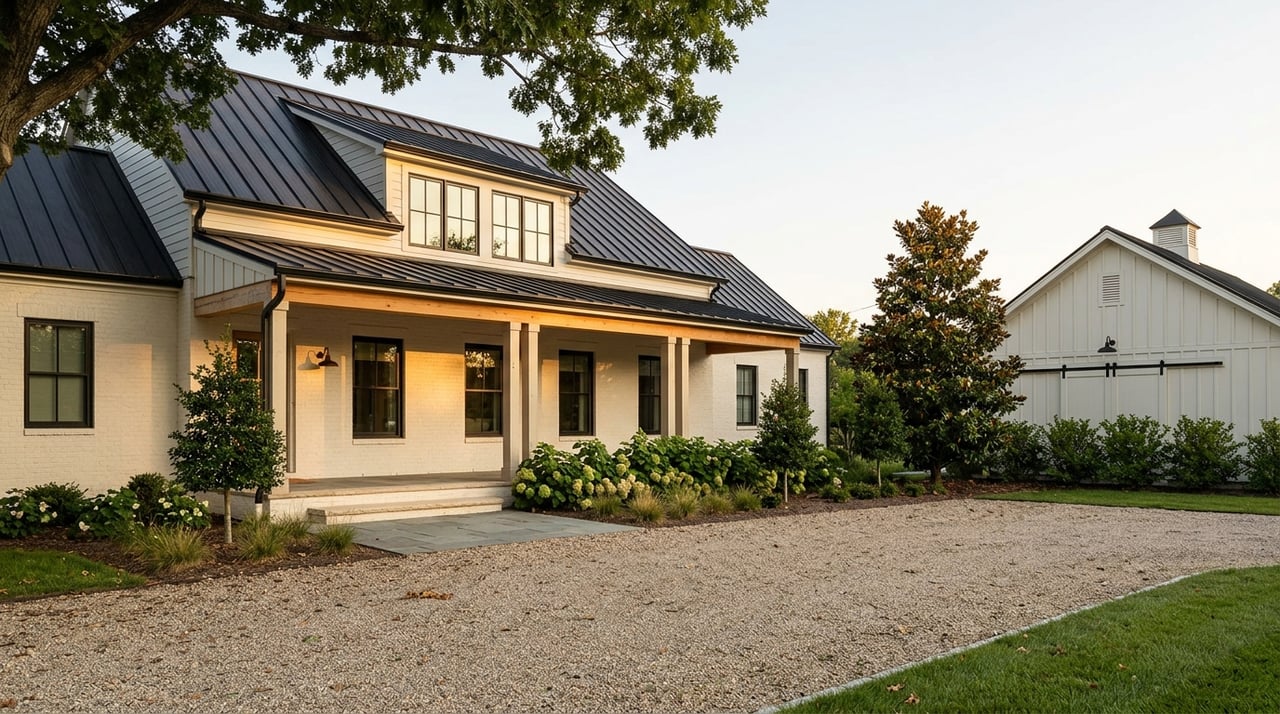
A Milton mini-estate is not one single property type. In practical terms, it often means a home with meaningful land around it, more distance from neighboring houses, and room for features that would be difficult to find on a standard neighborhood lot.
Milton’s zoning helps shape that experience. The city’s R-1 single-family district requires 2-acre lots, while other residential districts can allow smaller lots, such as R-3A at 18,000 square feet. This is one reason Milton has a mix of property styles rather than one uniform development pattern.
In some areas, the land use feels even more expansive. The city’s planning materials describe a lifestyle mix that includes hobby farms, equestrian facilities, and large-lot residential estates, including minimum 3-acre lots on gravel roads. That landscape contributes to the sense that a mini-estate in Milton can offer a more private and pastoral setting without requiring the scale of a full agricultural property.
You may also notice that homes often feel tucked away. In the Rural Milton Overlay, the city uses 50-foot buffers on sites of 4 acres or less and 75-foot buffers on sites over 4 acres next to agricultural or residential uses. For you as a buyer, that can translate into more separation, more tree cover, and a quieter visual experience from one property to the next.
Privacy Is a Real Part of Daily Life
When buyers picture mini-estate living, privacy is usually near the top of the list. In Milton, that privacy often comes from lot size, buffers, mature landscaping, and longer driveways rather than gates or dense subdivision planning.
This creates a different feel from a traditional neighborhood. You may have more room for a detached structure, outdoor entertaining, gardens, or simply open lawn and wooded edges. Even when homes are not far from local amenities, the day-to-day experience can feel more removed from traffic and noise.
That sense of privacy is one of the clearest lifestyle advantages. If you want room to spread out and a property that feels more personal and less compressed, a Milton mini-estate can deliver that in a way many suburban communities cannot.
Outdoor Living Shapes the Lifestyle
In Milton, outdoor space is not just something you own. It is also part of the broader culture of the city. Daily life here is shaped by trails, preserves, parks, pastures, and a strong appreciation for open land.
The city says it owns and maintains active parks and passive preserves. Its parks system includes fields, playgrounds, trails, fishing, and picnic areas, with examples such as Bell Memorial Park, Birmingham Park, Milton City Park and Preserve, Lakhapani Preserve, and Providence Park.
For many homeowners, this adds another layer to mini-estate living. Your property may offer private outdoor space, but the surrounding city also supports an outdoor-oriented lifestyle. That can make it easier to build daily routines around walking, riding, exploring, and spending more time outside.
Equestrian Culture Is Part of Milton’s Identity
Milton’s equestrian roots are not just part of its branding. They are visible in the landscape and supported by the city’s planning and community structure. The city has a formal Equestrian Committee, and in 2024 it said a city-led farm census identified more than 200 active horse farms around Milton.
Those horse farms are dispersed widely rather than concentrated in one single pocket. That matters because it means horses, fenced pastures, and equestrian facilities are part of the broader visual rhythm of the community. Even if you are not looking for a full horse property, you may still be drawn to the setting that comes with that land pattern.
For buyers who do want equestrian potential, Milton can be especially compelling. A mini-estate may offer enough room to explore land use options, but each property should be evaluated carefully based on its specific zoning, access, buffers, and physical layout.
Ownership Comes With More Stewardship
The appeal of more land is straightforward. The responsibilities that come with it are equally real. Owning a mini-estate in Milton often means you are managing more than a house.
Depending on the property, you may need to think about tree management, drainage, driveway maintenance, septic considerations, and how future improvements could affect the site. This is where mini-estate living becomes less about square footage and more about how comfortable you are with active property stewardship.
Milton requires tree-removal permits for protected trees 15 inches DBH or larger, for any small canopy tree 8 inches and larger, and for trees in landscape or stream buffers. If you are considering clearing space, improving views, or adjusting the layout of a lot, that rule matters early in your planning.
The city also says a land development permit is required when a project disturbs more than 1 acre, creates more than 5,000 square feet of new impervious surface, or otherwise meets the city’s threshold for land disturbance. In simple terms, larger property projects often involve more review than buyers expect.
There are also site-specific responsibilities to understand. Milton states that detention pond maintenance is the responsibility of the property owner or HOA. If a home uses septic, permits are issued by the Fulton County Health Department’s North Fulton office.
What to Evaluate Before You Buy
A beautiful setting is only part of the story. Before you buy a Milton mini-estate, it helps to look closely at how the property actually functions and what it will require from you over time.
Here are a few smart areas to review:
- Lot size and zoning: Confirm how the property is zoned and what that means for present and future use.
- Buffers and privacy: Understand how setbacks and buffers shape the site and limit certain changes.
- Access and driveway layout: Some properties may involve longer drives or shared-drive considerations.
- Trees and clearing: Find out what can and cannot be removed without permits.
- Drainage and stormwater: Ask whether there are ponds, drainage features, or maintenance obligations.
- Septic systems: If applicable, verify system details and permitting history.
- Lifestyle fit: Be honest about whether you want the freedom of more land and the work that can come with it.
This kind of review is especially important in a market like Milton, where no two acreage properties feel exactly the same. The details of the land often matter just as much as the house itself.
Why the Right Buyer Loves It
For the right buyer, living on a Milton mini-estate feels like a middle ground that is hard to find elsewhere. You get more privacy, more distance between homes, and a stronger connection to the outdoors, while still staying within reach of everyday services and commuting patterns.
You also gain something less tangible but just as important: a sense of place. Milton’s rural and equestrian identity shapes the way the city looks and feels, and that character is a large part of the draw for buyers who want more than a standard neighborhood experience.
The key is going in with clear expectations. If you value land, beauty, and breathing room, and you are comfortable with the added responsibilities that come with ownership, a Milton mini-estate can be an exceptional fit.
If you are considering a move in Milton and want a thoughtful, design-minded perspective on land, luxury homes, or equestrian property, Kristin Sheehan can help you evaluate not just the house, but how the property truly lives.
FAQs
What is a mini-estate in Milton, GA?
- A mini-estate in Milton usually refers to a home with substantial land, more privacy, and room for features like trees, longer driveways, outbuildings, or pasture-like space, without being a full-scale agricultural property.
How rural does Milton, GA feel?
- Milton has a distinctly semi-rural feel. The city says about 85% of its more than 39 square miles are agriculturally zoned, while still offering access to schools, restaurants, shops, and other amenities.
Are all homes in Milton, GA on large lots?
- No. Milton is not a uniform large-lot market. Some districts require 2-acre lots, while others allow smaller residential lots, so property size and setting can vary significantly.
What should buyers check before purchasing a Milton mini-estate?
- Buyers should review zoning, buffers, tree rules, driveway access, drainage, detention pond responsibilities, septic details if applicable, and the overall maintenance needs of the land.
Is Milton, GA a good fit for equestrian-minded buyers?
- Milton can be very appealing for equestrian-minded buyers because the city has strong rural roots, a formal Equestrian Committee, and more than 200 active horse farms were identified in a 2024 city-led farm census.