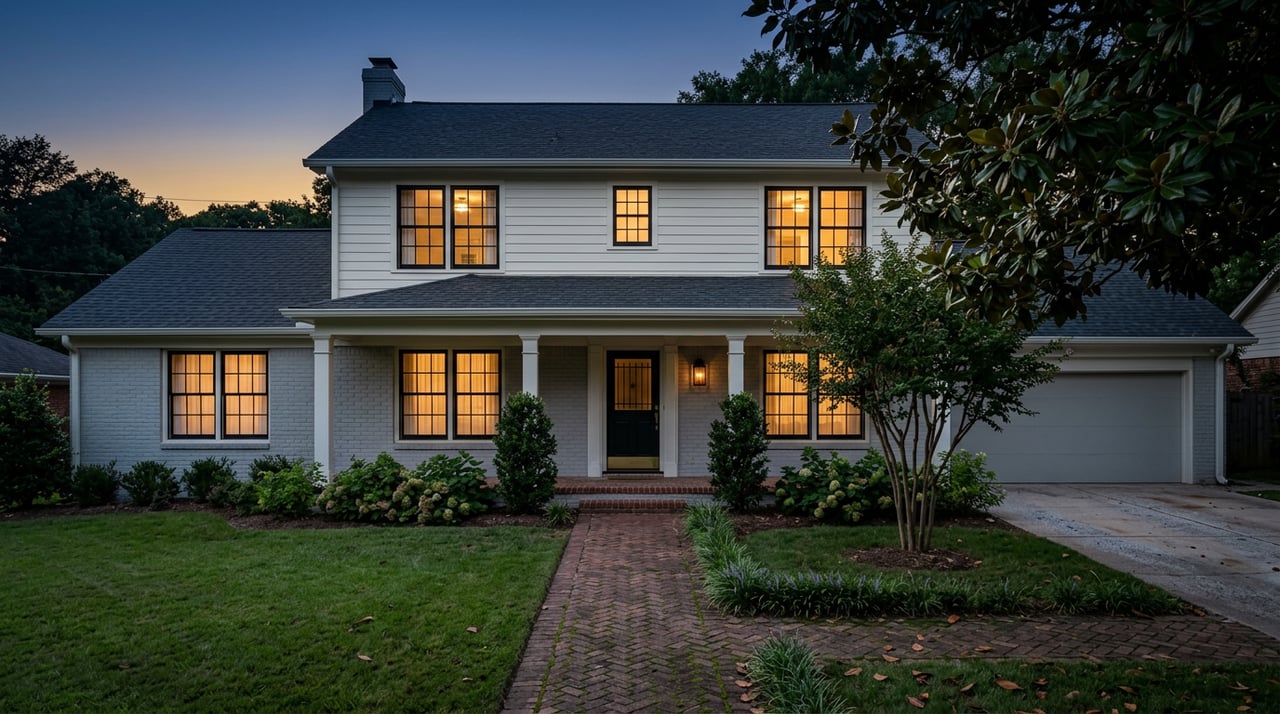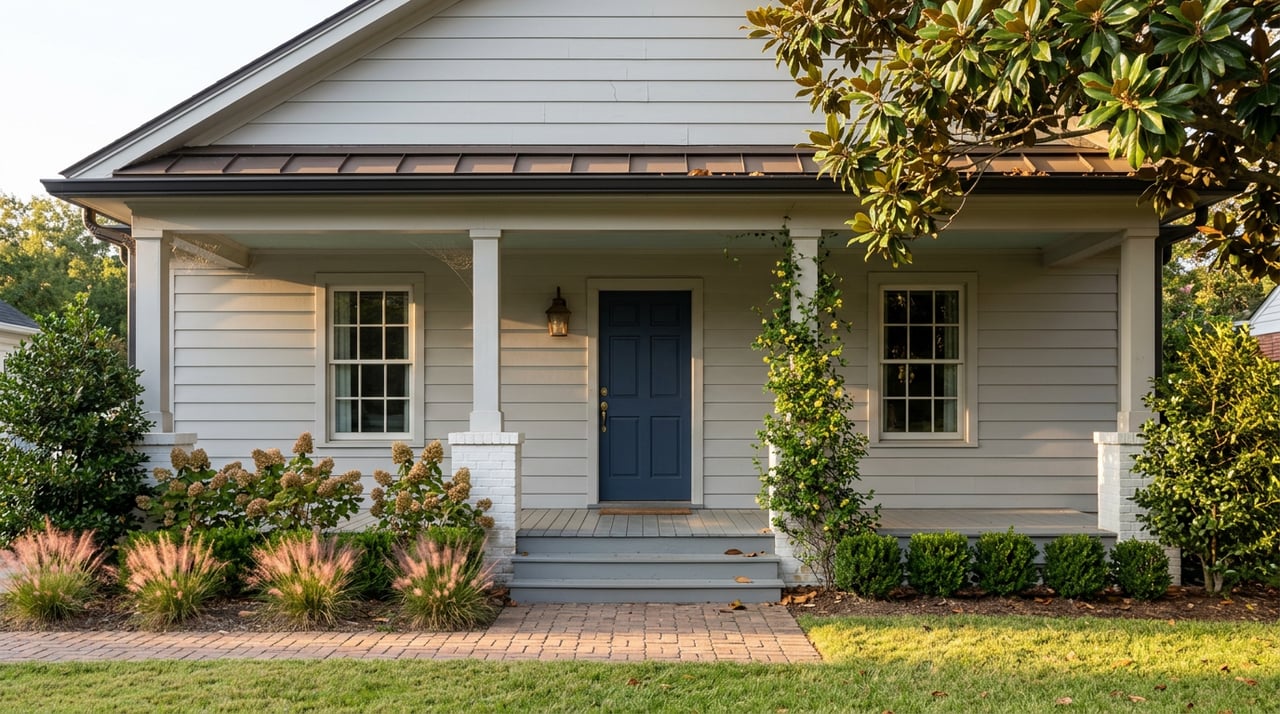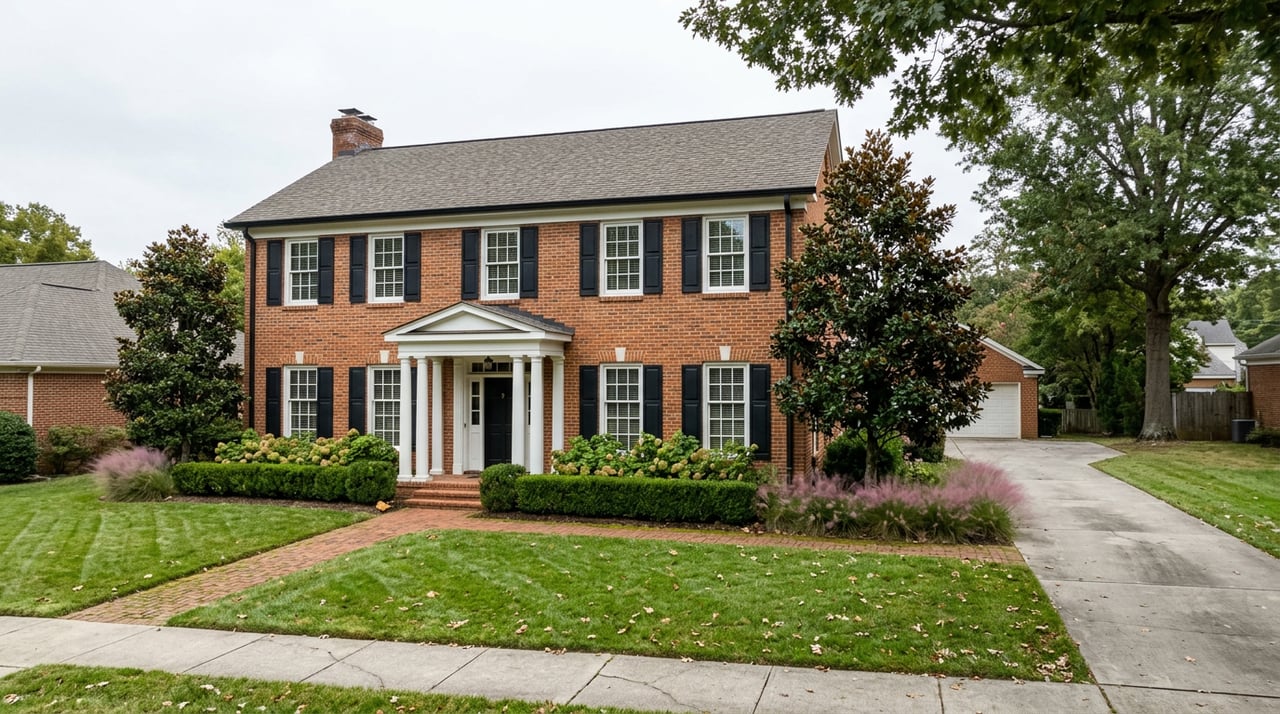
Two showings, same Saturday. The first is a bungalow a few blocks off Canton Street, the kind of house that comes with a Certificate of Appropriateness file and a story about who lived there in the 1940s. The second is a brick traditional in an established subdivision a few miles out, built in 1985, nothing about it reads as old. Most buyers walk out of the first house bracing for plumbing trouble and walk into the second assuming they've dodged it. That instinct is backwards often enough that it's worth correcting before you write an offer on either one.
The actual plumbing risk in Roswell doesn't track with whether a house sits inside the 640-acre Historic District. It tracks with the year the house was built, and the riskiest window isn't the oldest one.
What the Historic District Rule Actually Covers
Roswell's Historic Preservation Commission has reviewed exterior changes in the district since the city's preservation program was certified under state and national law in January 1992. If you're buying a contributing property, a Certificate of Appropriateness is required before you touch the exterior in a way that changes its appearance, and before the city will issue a building permit for that work. That process is real and it does add a step to renovation planning.
It's also narrower than most buyers assume. A 2014 opinion from the Georgia Attorney General's office, written specifically about Roswell's ordinance, concluded that the Historic Preservation Commission cannot regulate exterior paint color at all. State law excludes paint from the definition of a material change in appearance, so even in the district, repainting the trim isn't a commission matter. The rule buyers worry most about is aesthetic and exterior. It has nothing to say about what's running through the walls.
That distinction matters because the plumbing conversation and the historic district conversation are two different conversations that keep getting merged into one.
The Three Eras That Actually Determine Risk
Roswell's housing stock splits into three plumbing eras, and only one of them lines up with what people picture when they hear "historic."
| Construction Era | Common Supply Pipe | Common Sewer Line | Where You'll Find It in Roswell | The Practical Risk |
|---|---|---|---|---|
| Pre-1960s | Galvanized steel | Cast iron or clay | Homes near Canton Street, Mimosa Boulevard, Bulloch Hall, and the rest of the Historic District | Corrosion narrows the pipe from the inside, cutting water pressure and discoloring hot water well before anyone sees an actual leak |
| 1978 to 1995 | Polybutylene (PB) | Varies, often original to the subdivision | Established, ordinary-looking subdivisions built during Roswell's suburban growth years, not limited to the historic core | Fails from the inside without warning, and the claims deadline for the national settlement closed in 2009, so replacement is entirely the owner's cost today |
| Post-1996 | Copper or PEX | PVC | Newer construction and post-1996 infill throughout the city | The lowest-risk category, and the material you actually want to see written on an inspection report |
The middle row is the one that changes how you should shop. Polybutylene was installed across the country from 1978 through 1995, marketed at the time as a cheaper, more flexible alternative to copper. It reacted badly with chlorine in treated water, degraded from the inside, and by the mid-1980s was already generating enough failures to trigger litigation. The resulting class action, Cox v. Shell Oil Co., settled in 1995 with an initial fund of $950 million that grew to roughly $1.14 billion in total homeowner relief before the claims window closed permanently in 2009. If your home's PB pipe fails today, there's no settlement fund standing behind it. You're covering the repipe yourself.
Why the 1980s Boom Complicates the Story
Here's the part that trips people up: 1978 to 1995 wasn't a quiet stretch in Roswell. It was a building boom. North Fulton County added subdivision after subdivision through those years, and polybutylene was standard-issue plumbing for a huge share of that construction, not a defect limited to bargain builders. A house from that era in an unremarkable, well-kept neighborhood can carry the exact same supply-line risk as a house twice its age near the historic core, just for a different reason and with a different material.
So the buyer touring that 1985 traditional and feeling relieved that it "isn't old" is asking the wrong question. The right question isn't whether the house predates the subdivision era or sits inside a preservation overlay. It's simply: what year was this house built, and has anyone confirmed what's actually running behind the drywall.
A quick gut check before you write an offer:
- What year was the home built, and does that fall inside 1978 to 1995
- Has the home been repiped, and is there documentation of when and with what material
- Is the visible plumbing near the water heater, under sinks, or in the attic gray or blue plastic stamped "PB"
- Has the seller disclosed any prior leaks, insurance claims, or plumbing repairs
None of these require a specialist to check before your first walkthrough. They just require asking a different question than "is this house old."
What Actually Happens at the Inspection Table
Standard home inspections cover the categories you'd expect: roofing, foundation, HVAC age, electrical panels, plumbing materials. Polybutylene sits in an odd spot within that process. Because it looks fine from the outside even as it degrades internally, and because standard inspection scopes don't always call it out by name, it's common for PB to go unmentioned in a report unless the buyer or their agent specifically asks the inspector to look for it and note it.
The plumbing line item on a standard inspection report tells you what's visible. It doesn't automatically tell you whether that visible pipe is the kind that fails without warning.
This is where the historic core and the 1980s subdivision actually behave differently in ways that matter more than their age suggests. A pre-1960s home with galvanized steel gives you warning signs first: reduced pressure, rust-colored hot water, a slow decline you can act on before it becomes an emergency. Polybutylene tends to fail suddenly, which is part of why it draws more scrutiny once it's found. Some insurance companies have denied coverage or raised premiums on homes with known polybutylene supply lines, and buyers who discover it during inspection frequently make replacement a condition of the sale. If an inspection turns up PB, that's not a footnote. That's a line item that belongs in your negotiation before you get to the closing table, not after.
What It Means If You're Selling
If your home falls in that 1978 to 1995 window, the real decision is whether to get ahead of the conversation before a buyer's inspector does it for you. A documented repipe before listing removes the question entirely and lets your listing compete on its own terms rather than absorbing a price reduction mid-negotiation. Short of a full repipe, having a plumber's written assessment on hand gives a buyer's agent something concrete to work with instead of a guess. Either path beats finding out for the first time when a buyer's inspector asks a question you can't answer.
What the Market Is Actually Telling You
Roswell's overall pace in August 2026 sat at a median list price near $699,000 with homes moving in about 47 days, per Movoto's listing data for that month. Redfin's February 2026 figures showed a median sale price of $645,000, also around 47 days on market, in a market it described as receiving roughly two offers per listing on average. Those numbers vary some depending on which platform and which month you're comparing, which is normal for a mid-size city with distinct pockets rather than one uniform market.
What's more telling is how those pockets pace against each other. A spring 2026 breakdown of Roswell submarkets found the Historic District moving in about 30 days, faster than Horseshoe Bend at 37, Barrington at 46, and Holcombs Crossing at 48, with only Martin's Landing outpacing it at 23 days. If buyers genuinely treated the historic core as a plumbing liability, you'd expect it to sit longer, not shorter, than several later subdivisions. It doesn't. That tells you buyers aren't actually pricing in pipe-material risk at all. They're pricing in charm, walkability, and proximity to Canton Street, while a comparable risk sits quietly in a 1980s subdivision that nobody thought to ask about.
Frequently Asked Questions
Does a home inspector automatically check for polybutylene pipe in Roswell? Not always as a matter of course. Ask directly and ask the inspector to specifically note supply pipe material in the report, particularly on any home built between 1978 and 1995.
Can I still file a claim if I discover polybutylene in my home today? No. The Cox v. Shell Oil settlement closed its claims window in 2009. Replacement today is the homeowner's responsibility.
Does buying inside Roswell's Historic District mean more plumbing risk? Not inherently. Pre-1960s homes in the district commonly have galvanized or cast iron systems, which show warning signs like reduced pressure before they fail. A 1980s subdivision home outside the district can carry polybutylene risk that behaves very differently and often gets less scrutiny simply because the house doesn't look old.
Whether you're comparing a bungalow near the historic core or a subdivision traditional built during the 1980s boom, the plumbing question deserves a specific answer, not a general impression based on how old the house looks. If you're weighing a purchase or getting a Roswell property ready to list, Kristin Sheehan can walk the details with you, from what a build year actually tells you to how to position a home so a later discovery doesn't become a last-minute renegotiation. Let's Connect.