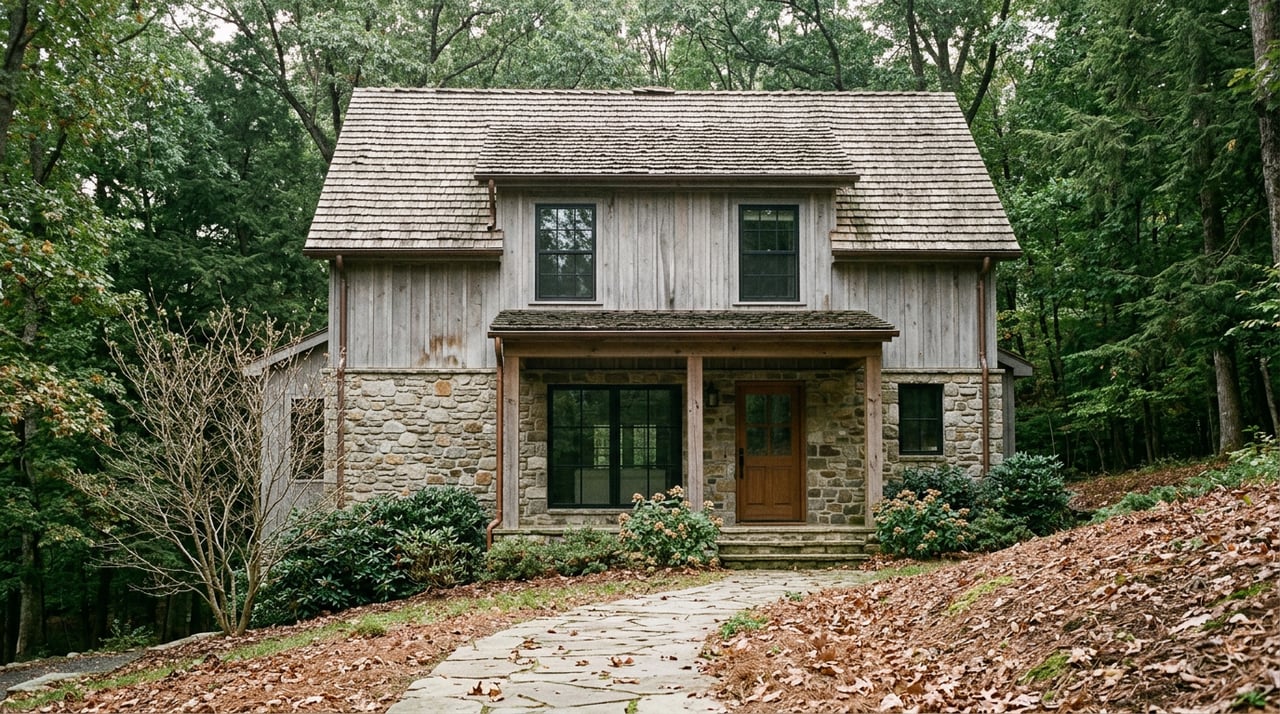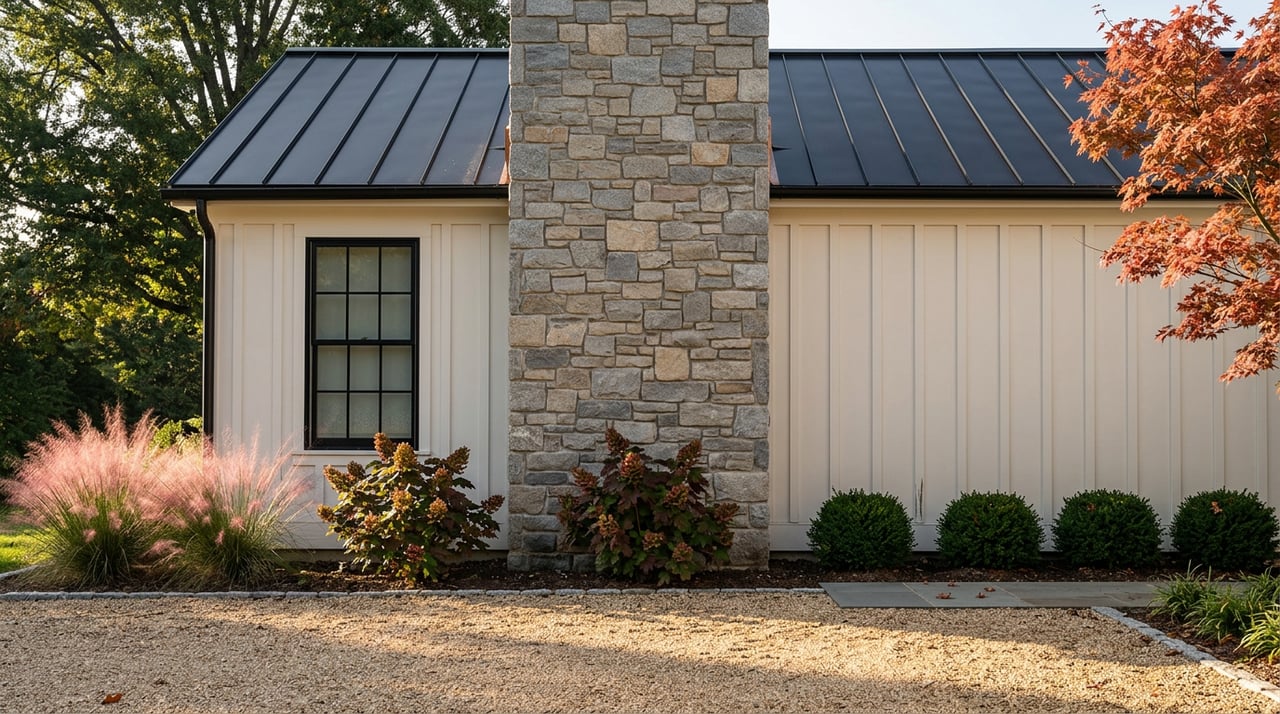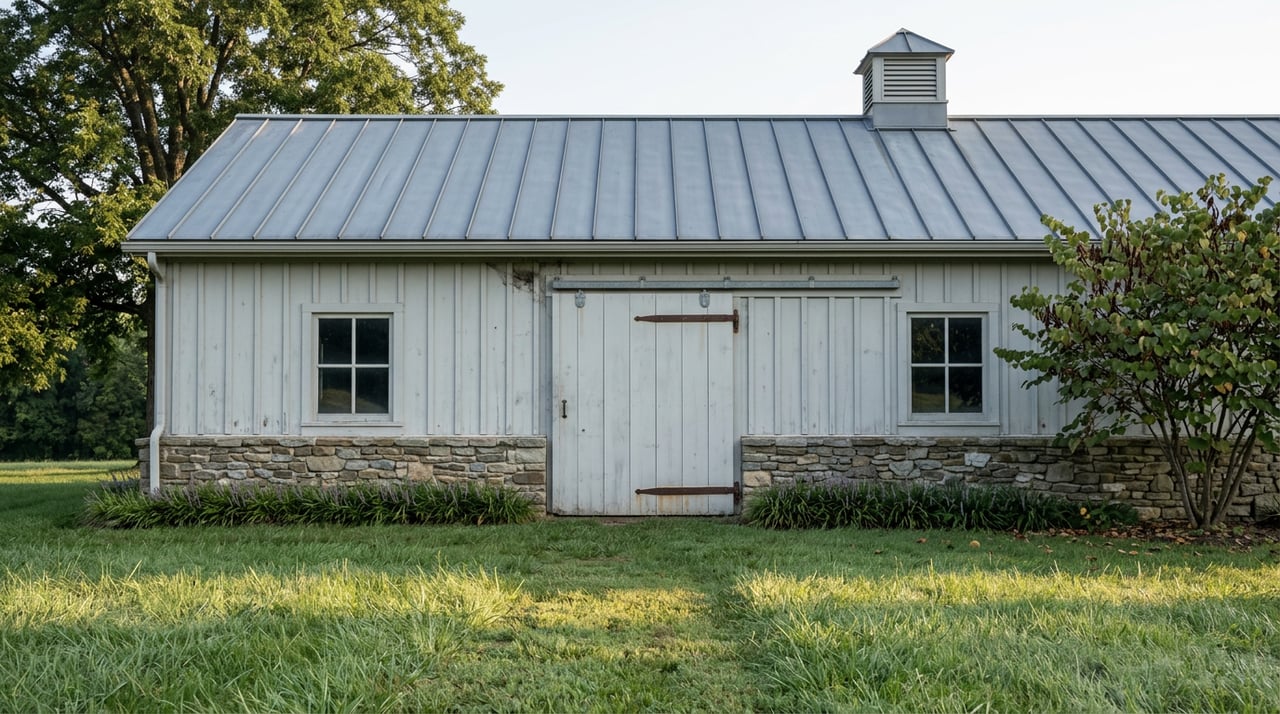
Ask a buyer what makes a property "horse-ready" and most will point to the acreage number. Ten acres sounds like plenty. Twenty seems generous. But acreage alone doesn't tell you how many horses you're legally allowed to keep, where you're allowed to put the barn, or whether you can build that barn before you've even broken ground on the house. In Cherokee County, that answer lives in a zoning designation most buyers never think to ask about until they're already under contract.
Two ten-acre parcels in Hickory Flat can support entirely different equestrian operations depending on one line on the zoning map. That difference is worth understanding before you fall for a listing photo of a red barn against a green pasture.
The Zoning Line Hiding Under the Acreage Number
Cherokee County splits residential land into two categories that matter enormously for horse owners, and the distinction rarely shows up in a listing description. On AG-zoned property, there's no cap on the number of horses, cattle, goats, or other livestock you can keep, as long as the animals are maintained in safe and humane conditions. On land zoned Residential, the rule tightens considerably: you need a minimum of two acres, and you're limited to one animal per acre.
That means a 10-acre Residential parcel tops out at ten horses on paper, while an AG-zoned parcel of the same size has no such ceiling written into the ordinance. For a buyer planning a working boarding operation or simply wanting flexibility as a herd grows, that's not a minor footnote. It's the difference between a property that can scale with your plans and one that can't, regardless of how much pasture is visible from the driveway.
Before you tour a property, ask your agent to pull the zoning designation, not just the acreage. The Cherokee County zoning department publishes the underlying rules directly, and it's worth reading the source rather than relying on a listing agent's paraphrase.
Where the 75-Foot Setback Actually Bites
Even on AG-zoned land, there's a physical constraint that catches buyers off guard: a barn has to sit at least 75 feet from any property line. On a sprawling parcel, that setback barely registers. On a narrower or irregularly shaped lot, it can eliminate more usable building area than the acreage figure suggests.
This is where a walk of the actual boundary lines matters more than the number on the plat. A 10-acre rectangle and a 10-acre parcel shaped like a long, narrow strip along a road frontage behave very differently once you subtract a 75-foot buffer on every side. Recent land listings in the immediate Hickory Flat corridor illustrate the range: a 27-acre parcel on Hickory Flat Highway with a mix of pasture, woodland, and a 3-acre pond, and an 82-acre horse farm about a mile south of that same corridor with rolling pasture and wooded sections. Parcels with that kind of depth tend to absorb the setback without much friction. Smaller, tighter parcels closer to the road may not.
A barn also requires a building permit in Cherokee County, along with any other farm outbuilding or detached storage structure. Accessory buildings under 200 square feet may be exempt from the permit itself, but the setback and erosion control requirements still apply regardless of size. Don't assume a small run-in shed skips the paperwork entirely.
The Sequencing Rule That Changes How You Build
Here's the detail that surprises even buyers who've done their zoning homework. Cherokee County ordinance generally prohibits building an accessory structure before the principal residence goes up on a lot, with one specific exception: a barn on AG-zoned property.
For anyone phasing a build, that's a meaningful advantage. It means a buyer purchasing raw AG land can put up the barn first, get horses on site, and build the house on a separate timeline, all without running afoul of the county's usual sequencing rule. If you're planning to board your own horses while you design and build a custom home, or if you want the infrastructure in place before you commit to a construction loan on the residence, this is the ordinance quirk that makes it possible. It's easy to miss because it reads like a minor exception buried in the accessory structures section, but for equestrian buyers it changes the entire order of operations.
What "Equestrian Community" Actually Looks Like Here
Listings love the phrase "equestrian community," but it's worth checking that claim against what's physically nearby. In the immediate Hickory Flat area, there's real infrastructure behind the phrase. Waters Edge Equestrian operates as a boarding barn in the Hickory Flat area of Woodstock, offering individual turnouts, a wash rack, and lesson programs. Alpha Equestrian Center, home to Heaven's Gait Therapeutic Riding, sits alongside its neighbor, The Stables at Hickory Flat, forming a small cluster of working equine operations rather than a single isolated barn.
For trail access, Garland Mountain Horse and Hiking Trails offers 19.7 miles of trail through more than 940 wooded acres in northwest Cherokee County, open to both hikers and riders. It's not walking distance from most Hickory Flat parcels, but it's the closest significant riding trail system serving this part of the county, and it's worth checking drive time from any specific property you're considering. Closer to home, Hickory Trails Park is a 24-acre passive park at 3860 Hickory Road that Cherokee County has owned since 1998, with a three-quarter-mile walking trail through wooded terrain. It's a pleasant amenity, but it's a walking park, not a riding trail, so don't let the name imply more than it delivers.
The presence of working boarding barns nearby tells you something a listing description can't: that the surrounding land use, water infrastructure, and zoning pattern already support horses at scale. A property surrounded by established equestrian operations is a safer bet for long-term usability than one sitting alone in a subdivision that happens to allow livestock on paper.
Why the Average Price Doesn't Apply to You
If you've searched land listings for Cherokee County, you've likely seen an average price somewhere around $748,640 for rural properties, ranches, and acreage currently on the market. That number is real, but it's not the number that applies to a functioning horse property.
Equestrian-specific listings in Cherokee County run meaningfully higher. Recent data on active horse and equestrian properties in the county shows prices starting around $1,699,000 and averaging closer to $1,899,500, with some reaching $2.1 million. Separately, farm-specific listings across the county average around $2 million. The gap between the county-wide land average and the equestrian-specific average isn't noise. It reflects the capital already sunk into the ground on a working horse property: cleared and fenced pasture, an established barn, arena footing, wells, and road frontage that supports trailer access.
| Category | Typical Price Point |
|---|---|
| All rural land and acreage listed county-wide | Averages roughly $748,640 |
| Equestrian-specific properties, active listings | Starting near $1.7M, averaging about $1.9M |
| Farm-specific listings, county-wide | Averaging roughly $2M |
If your search started with a general land portal and a county-wide average in your head, recalibrate before you set a budget. A raw parcel priced near the county average almost certainly lacks the infrastructure a working horse property needs, and building that infrastructure from scratch adds real cost on top of the land itself.
What to Check Before You Write an Offer
- Confirm the zoning designation directly with the county, not just the listing sheet
- Walk the property boundary and estimate where a 75-foot barn setback actually falls
- Ask whether any existing barn was permitted, and if not, factor that into your due diligence
- If you're planning a phased build, confirm the parcel is AG-zoned so the barn-before-house sequencing applies
- Compare the asking price against equestrian-specific comps, not general county land averages
None of this replaces a conversation with the county planning office or your own attorney. But knowing which questions to ask before you tour a property saves you from falling for a barn photo on land that can't actually support the plan you have in mind.
Frequently Asked Questions
Can I keep horses on Residential-zoned land in Hickory Flat, or does it have to be AG? Residential zoning does allow livestock, provided the lot has a minimum of two acres and you stay within one animal per acre. AG zoning removes that cap entirely, provided the animals are kept in safe and humane conditions.
Do I need a permit just to put up a small run-in shed? Structures under 200 square feet may be exempt from the building permit itself, but setback and erosion control requirements still apply. Anything larger, including a standard barn or farm outbuilding, requires a permit.
Is it true I can build a barn before the house on the same property? Yes, but only on AG-zoned land. The county's general rule against building accessory structures before the principal residence carries a specific exception for barns in the AG district.
If you're weighing a specific parcel in the Hickory Flat area and want a second set of eyes on the zoning, the setbacks, or how a property compares to what's actually trading nearby, Kristin Sheehan has spent two decades working through exactly this kind of detail with equestrian buyers across North Georgia. Let's Connect before you write the offer, not after.