Dreaming about a few usable acres in Hickory Flat? You are not alone, and this part of Cherokee County continues to attract buyers who want more space, more flexibility, and a property that supports a rural lifestyle. The key is knowing that buying land or a mini-farm here is about much more than the listing photos, so understanding zoning, access, utilities, and long-term area planning can help you buy with confidence. Let’s dive in.
Why Hickory Flat draws land buyers
Hickory Flat is a planning target area in Cherokee County centered around Hickory Flat Highway, East Cherokee Drive, and Hickory Road and Batesville Road. County planning describes the area as close-knit with a strong agriculture, forestry, fishing, and hunting identity, while also noting rising congestion, suburban-style development, and pressure on its rural character.
That mix is important when you are shopping for land. A property here can offer room for a home, garden, animals, or hobby farm use, but your purchase is also tied to how the surrounding corridor may change over time. Cherokee County’s planning goals include protecting natural resources, supporting agribusiness, improving infrastructure before additional development, and expanding sidewalks and trails.
For you as a buyer, that means it helps to think beyond acreage alone. You may want to decide whether your priority is preserving a rural setting, buying near the growth edge, or choosing a parcel with future flexibility in mind.
Start with zoning, not assumptions
One of the biggest mistakes land buyers make is assuming a property can be used a certain way because of what they see nearby. Cherokee County says zoning maps are updated as rezonings are approved, so parcel-by-parcel verification matters more than general impressions.
For mini-farm buyers, the General Agricultural district is especially relevant. Cherokee County says this district is intended to preserve agricultural activity and livestock production, discourage suburban subdivision, and support large-lot detached homes.
The county also notes that estate and low-density residential districts may still allow limited crop production and animal husbandry on tracts of 5 acres or more. In practical terms, the right question is not simply, “Can I farm here?” It is also, “How much of that rural use is protected today, and how might future subdivision pressure affect the setting later?”
Why future land use matters
Cherokee County’s comprehensive plan uses character areas, nodes, corridors, and a future-development map to guide growth. That means your due diligence should include both current zoning and the county’s broader planning direction for the area around the parcel.
This is especially important in Hickory Flat, where growth and rural character are both active parts of the conversation. If you want long-term privacy, a horse setup, or a quieter agricultural feel, the surrounding land pattern matters almost as much as the lot itself.
Access can make or break a land purchase
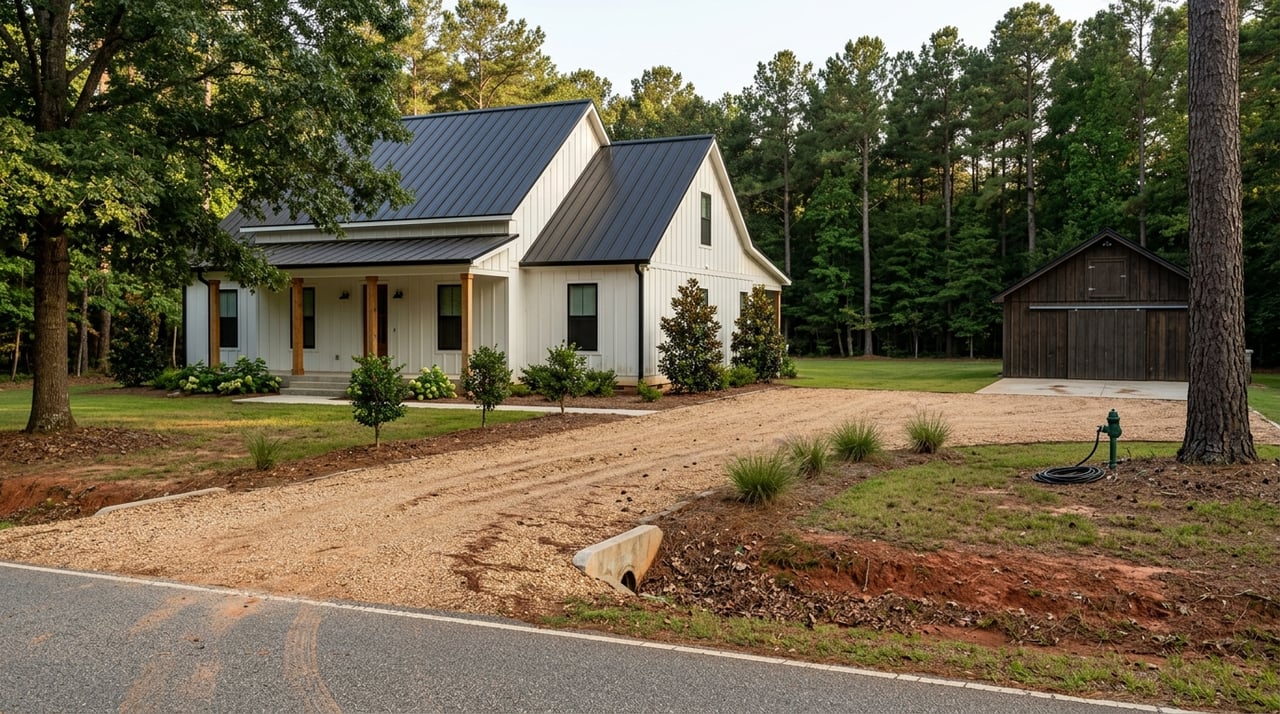
A beautiful piece of land is not very useful if access is difficult, expensive, or uncertain. In Cherokee County, driveway permits are part of the process for lots on county-owned rights of way without curb and gutter, and the county’s driveway application requires attention to drainage, turn-around space, and keeping runoff out of the county right-of-way.
If the property is part of a minor subdivision, each lot must have its own driveway on a county-owned road. Cherokee County also says minor subdivision lots cannot share a driveway or share common infrastructure such as water lines.
If your parcel fronts a state highway, there is another layer to review. Cherokee County zoning says entrances and exits from that highway must be approved by both the Georgia Department of Transportation and the County Engineer before the access point is built or development permits are issued.
What to confirm about access
Before you close, it is wise to verify:
- Road frontage and legal access
- Whether the road is county-maintained or tied to state highway access rules
- Driveway permit requirements
- Drainage considerations near the proposed entrance
- Whether the site layout still works after the driveway location is defined
Water, sewer, septic, and wells need early review
Utility planning is one of the most important parts of buying land in Hickory Flat. In unincorporated Cherokee County, the county directs buyers to CCWSA for water and sewer questions and to the North Georgia Health District for septic questions. Even when service is nearby, parcel-level availability still needs to be confirmed.
Many land and mini-farm properties rely on septic, a well, or both. That can work very well, but only if the site supports those systems in the right locations.
For septic systems, the North Georgia Health District says permits are required before installation of any on-site sewage system. Cherokee County Board of Health lot-size rules for sites using wells and on-site sewage start at 54,000 square feet in the best soil and slope categories and can increase to 3 acres, while sites with public water and on-site sewage may allow minimum lot sizes reduced by up to 50 percent.
Private wells also come with siting rules. Georgia DPH says wells should be located away from pollution sources and must be at least 50 feet from a septic tank, 100 feet from a septic absorption field, and 100 feet from an animal or fowl enclosure.
Why site layout matters on mini-farms
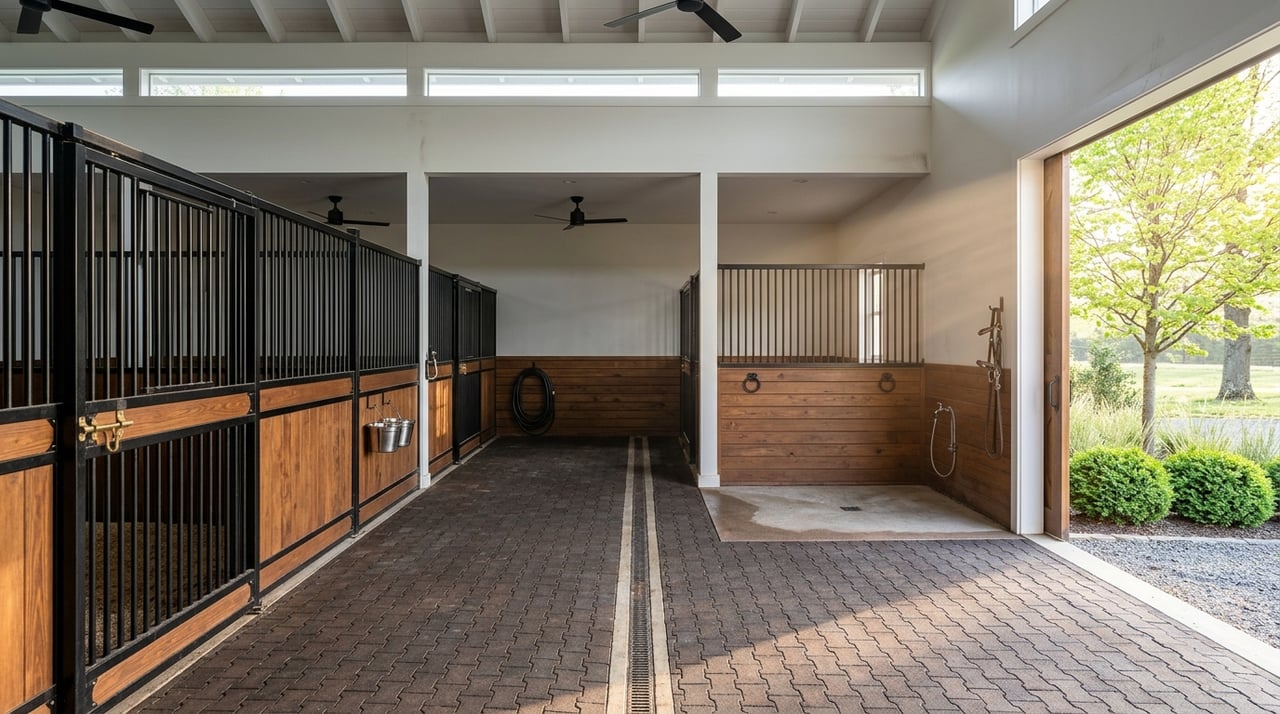
On a mini-farm, the house is only one part of the plan. If you are thinking about a barn, chicken run, paddock, garden, or future guest structure, those uses can affect where a well or septic field can go.
That is why layout matters so much early on. A parcel may look large enough on paper, but usable placement can narrow quickly once setbacks, topography, septic needs, well separation distances, and driveway access are considered together.
Clearing, grading, and permits affect your budget
Many buyers focus first on price per acre. In reality, site work often shapes the true cost of ownership.
Cherokee County’s Land Disturbance Permit applies to clearing and grading of one acre or more, vegetation removal, excavation and filling, debris deposition, and any soil disturbance within 200 feet of state waters. Smaller projects may fall under a separate erosion-control permit, and the county notes that plan review happens through CityView rather than paper submissions.
If you expect to clear woods, create pasture, or build a homesite, permit timing and site conditions matter. Wooded or sloped land may require more planning for grading, erosion control, and overall layout.
If outdoor burning is part of your maintenance plan, Georgia’s open-burning rules also apply. The state notes that outdoor burning often requires a Georgia Forestry Commission permit, and prescribed burning is prohibited in Cherokee County.
Existing barns and outbuildings are not automatic value
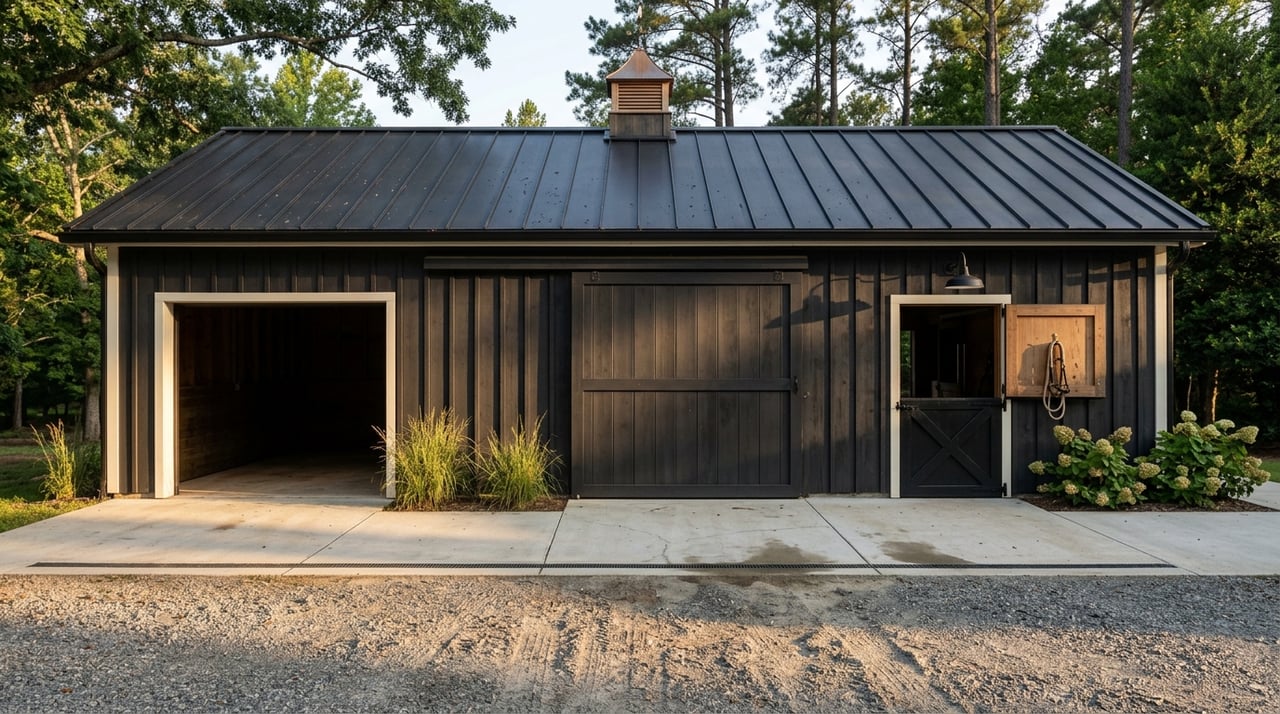
A barn, cottage, or older outbuilding can add appeal to a Hickory Flat property, but it should still be treated as a due-diligence item. Existing structures do not automatically guarantee usable square footage, legal conversion options, or easy utility connections.
Cherokee County requires building permits for construction activity in unincorporated areas, and its development process may involve driveway permits, septic approvals, grading plans, and erosion-control inspections before a building permit or certificate of occupancy is issued. If you are considering expanding, converting, or reusing an older structure, permit status and code compliance can change the budget quickly.
If you may split the property later
Some buyers want to enjoy a parcel now while keeping future options open. If that is part of your strategy, it is smart to review subdivision requirements before you buy.
Cherokee County’s rural subdivision rules may require site-plan approval, a Land Disturbance Permit, a final plat, and in some cases a Notice of Intent with Georgia EPD. If septic is involved, State Environmental Health approval is required before county approvals.
That matters because a parcel that works well as one homesite may not easily support a future split. Access, septic feasibility, shared infrastructure limits, and lot layout all come into play.
Professionals worth bringing in early
Land purchases often go more smoothly when the right people are involved before closing. In Hickory Flat, a few early conversations can help you avoid expensive surprises.
A surveyor is often one of the best first calls. Cherokee County’s erosion-control application expects accurate location of easements, property lines, buffers, setbacks, floodplains, septic components, rights of way, zoning buffers, and utilities.
A civil engineer or Level II design professional may also be important if lot-grading plans are required before a building permit. The county notes that many Level II professionals are land surveyors or civil engineers.
If the parcel will rely on septic, or if you may want to divide the property later, involving environmental health or a septic contractor early can save time. And if there is an existing barn, cottage, or utility connection to evaluate, a builder or inspector can help you understand what is realistically usable.
A practical checklist for Hickory Flat land buyers
Before you move forward on land or a mini-farm, try to confirm these items:
- Current zoning for the specific parcel
- Future-development context around the property
- Road frontage and legal access
- Driveway permit needs
- Water availability through CCWSA, if applicable
- Septic feasibility and lot-size implications
- Well placement constraints, if applicable
- Floodplains, buffers, easements, and setbacks
- Land-disturbance or erosion-control permit triggers
- Status and permit history of any existing structures
- Whether your long-term plan includes a future split
Why local guidance matters here
Buying land in Hickory Flat is both practical and personal. You may be looking for room to breathe, a place for horses, a homesite with design potential, or simply a property that fits the way you want to live.
The best outcomes usually come from matching your vision to the site’s real-world constraints and possibilities. In an area where rural identity and future growth are both shaping the market, that kind of careful planning can make a meaningful difference.
If you are considering land, acreage, or a mini-farm in Hickory Flat, working with an advisor who understands both property strategy and how land lives day to day can help you evaluate opportunities with more clarity. When you are ready to talk through your goals, connect with Kristin Sheehan.
FAQs
What should you check before buying land in Hickory Flat?
- Verify parcel-specific zoning, legal access, driveway requirements, utility availability, septic feasibility, setbacks, easements, and whether clearing or grading will trigger county permits.
Can you have animals on a mini-farm in Hickory Flat?
- It depends on the parcel’s zoning and acreage, since Cherokee County says agricultural uses and livestock production are protected in General Agricultural areas, while some estate and low-density residential districts may allow limited crop production and animal husbandry on tracts of 5 acres or more.
Does a Hickory Flat land purchase need septic review?
- If the property will use an on-site sewage system, yes, because the North Georgia Health District says permits are required before installation and local lot-size rules apply.
How do driveways work for Cherokee County land parcels?
- Cherokee County has a driveway application process for county roads, and access may also need additional approval if the parcel fronts a state highway.
Can you split land later in Hickory Flat?
- Possibly, but future subdivision plans should be reviewed early because Cherokee County may require site-plan approval, land-disturbance permitting, final plat approval, and septic-related environmental health approval.
Are existing barns or cottages on Hickory Flat land automatically usable?
- No, because existing structures should be evaluated for permit status, code compliance, utility connections, and any improvements needed before reuse, expansion, or conversion.